- 🌐 Why Do We Need Ports?
- 🔌 What Is a Socket?
- Port
- Socket
- Process
- 🖥️ How a Server Starts Listening
- Create a socket
- Bind it to a local address and port
- Start listening
- Accept a connection
- How Can Many Clients Use the Same Server Port?
- 🔄 Listening Socket vs Connected Socket
- 🔢 Port Ranges: What the Numbers Mean
- 📍 Binding to an Address Matters Too
- 🔐 Is an Open Port a Security Problem?
- 🧪 Mini Lab: Inspect Listening Sockets on Linux
- Step 1: Display listening TCP sockets
- Step 2: Ask for process information
- How to read the options
- Optional: Create a Temporary Local Listener
- ⚠️ Common Mistakes
- 🧠 Build the Right Mental Model
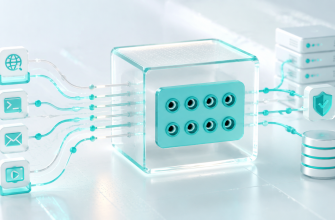
An IP address identifies a network destination, but a server usually runs many networked applications at the same time. A web server, SSH service, database, monitoring agent, and other programs may all share the same machine and the same IP address. Ports and sockets are part of the mechanism that lets the operating system deliver each network conversation to the right application.
A port is a numeric identifier used by transport protocols such as TCP and UDP to distinguish network services and communication endpoints on a host. A socket is an operating-system communication endpoint that a process uses to send or receive data.
A server application normally creates a socket, binds it to a local address and port, and waits for traffic. When a TCP client connects, the operating system can create a separate connected socket for that conversation while the original listening socket remains available for new connections.
- Why an IP address alone is not enough to identify a network application.
- What a port number represents and what it does not represent.
- How listening and connected sockets differ.
- How multiple clients can communicate with the same server port.
- How to inspect listening TCP sockets safely on Linux.
🌐 Why Do We Need Ports?
Imagine a machine with the IP address 192.0.2.10. The address identifies a network destination, but it does not tell the operating system whether incoming traffic belongs to a web server, an SSH daemon, or another application.
Transport protocols solve part of this problem by including port numbers. TCP and UDP use 16-bit port-number spaces, so a port number can range from 0 through 65535. Ports help the transport layer distinguish communication sessions and identify services. Port assignments and ranges are managed through the IANA service-name and port-number registry.
This simplified model is useful: the IP address helps identify the host or network interface, while the transport protocol and port help the operating system determine which communication endpoint should receive the data.
You will often see familiar services associated with familiar port numbers. HTTP is associated with TCP port 80, HTTPS with TCP port 443, and SSH commonly uses TCP port 22. These assignments make it possible for clients to know where a standard service is expected to be available.
A port is not a physical connector, a separate network interface, or a program. Think of it as part of the addressing information used by the transport layer. The application interacts with the network through a socket.
🔌 What Is a Socket?
A socket is an operating-system interface for communication. On Linux and other systems using the BSD sockets model, applications create sockets and use operations such as bind, listen, accept, connect, send, and receive to communicate.
That distinction is fundamental:
Port
A numeric transport-layer identifier used to distinguish services and communication endpoints.
Socket
An operating-system communication endpoint used by a process to exchange data.
Process
The running program that creates or uses the socket, such as a web server or SSH daemon.
Saying that “a program uses port 443” is convenient everyday language, but the more precise model is that the program creates a socket and the operating system associates that socket with an address and port.
🖥️ How a Server Starts Listening
For a TCP server, accepting connections involves a sequence of operating-system operations. Programming languages and frameworks often hide these details behind higher-level APIs, but the underlying model remains important.
Create a socket
The application asks the operating system for a network socket. For a typical TCP server, this is a stream socket using TCP.
Bind it to a local address and port
The application associates the socket with a local address, a port, or an appropriate wildcard address. This defines where the service should receive traffic.
Start listening
The application places the TCP socket into a listening state so that the operating system can handle incoming connection attempts for it.
Accept a connection
When a connection is established, the server accepts it and receives a socket representing that particular client-server connection.
The important detail is that the listening socket can remain listening. It does not have to become the client’s connection. A TCP server can therefore keep accepting new clients while existing clients communicate through their own connected sockets.
How Can Many Clients Use the Same Server Port?
This is where the idea of “one application per port” becomes too simplistic.
Suppose a web server listens on TCP port 443. Hundreds or thousands of clients may connect to that destination port without requiring hundreds or thousands of different listening ports.
A TCP connection can be distinguished by information including the source and destination IP addresses and source and destination ports, within the TCP protocol context. RFC 6335 describes the combination of the communicating hosts’ addresses and port numbers as the information that distinguishes a transport session.
| Client IP | Client Port | Server IP | Server Port |
|---|---|---|---|
| 198.51.100.20 | 53001 | 192.0.2.10 | 443 |
| 198.51.100.21 | 61742 | 192.0.2.10 | 443 |
| 198.51.100.22 | 49160 | 192.0.2.10 | 443 |
The client-side port numbers above are illustrative examples, not predicted values for a particular operating system.
All three clients are connecting to the same server port, but the connections are still distinct because the endpoint information differs.
A TCP server does not need a new listening port for every client. One listening socket can accept many connections, and each established connection has its own socket state.
🔄 Listening Socket vs Connected Socket
These two socket roles are easy to confuse, so it helps to compare them directly.
| Property | Listening Socket | Connected TCP Socket |
|---|---|---|
| Primary purpose | Wait for new connections | Exchange data with one connected peer |
| Remote peer required? | No specific connected peer | Yes |
| Can accept new clients? | Yes | No |
| Carries application data? | Not as an established client connection | Yes |
Linux’s TCP interface reflects this model directly: a server binds a socket, calls listen(), and then obtains a new socket for an incoming connection through accept().
🔢 Port Ranges: What the Numbers Mean
Port numbers occupy a 16-bit space. IANA divides that space into three major ranges for registry purposes.
| Range | IANA Name | Purpose |
|---|---|---|
| 0–1023 | System Ports | Ports commonly assigned to widely used or system-level services. |
| 1024–49151 | User Ports | Ports available for registered services and applications. |
| 49152–65535 | Dynamic Ports | A range intended for dynamic use rather than permanent service assignment. |
Do not confuse IANA’s registry ranges with an operating system’s exact runtime policy for choosing temporary client ports. Operating systems can have their own configurable ephemeral-port behavior.
The practical lesson is simpler: servers often listen on stable, known destination ports, while clients commonly use temporary source ports selected by the operating system.
📍 Binding to an Address Matters Too
A port number is only part of a server socket’s local identity. The address to which the application binds also matters.
For example, a service listening on 127.0.0.1:8000 is bound to the IPv4 loopback address. That normally makes it reachable from the local host rather than from another machine over an external interface.
A service bound to a wildcard address may accept connections destined for multiple local interfaces, subject to operating-system behavior, firewall rules, routing, network namespaces, and other controls.
“The application is listening on a port” does not automatically mean “the application is reachable from the Internet.” Reachability also depends on the bound address, host firewall, upstream firewall or security policy, routing, NAT, and the surrounding network.
🔐 Is an Open Port a Security Problem?
A port number itself is not vulnerable. Security depends on the service exposed through the socket and whether that exposure is intended.
When an application listens on a network-reachable address, it creates an entry point that may be accessible to other systems. Administrators therefore need to know which services are listening, which interfaces they are exposed on, and whether network policy permits access.
Closing an unnecessary service reduces exposure because there is no longer an application accepting traffic there. A firewall can additionally restrict which traffic is permitted to reach a listening service.
These mechanisms solve different problems. Stopping an unnecessary service removes the listener. A firewall controls network access according to policy.
🧪 Mini Lab: Inspect Listening Sockets on Linux
Goal: See which TCP sockets are listening on your Linux system and connect the output to the concepts in this lesson.
Step 1: Display listening TCP sockets
The ss utility can display socket information. The following command selects TCP sockets, shows only listeners, and keeps addresses and ports numeric:
ss -ltnLook for local addresses followed by port numbers. Depending on your system, you might see loopback addresses, wildcard addresses, IPv4 addresses, IPv6 addresses, or no listeners at all.
Step 2: Ask for process information
Add -p to request information about processes associated with sockets:
ss -ltnpPermissions affect how much process information you can see, so an unprivileged user may not see every process detail.
How to read the options
- -l — show listening sockets.
- -t — show TCP sockets.
- -n — show numeric addresses and port numbers instead of resolving service names.
- -p — show process information where available.
The important observation is the relationship between a listening socket, its local address, its local port, and the process using it.
Optional: Create a Temporary Local Listener
If Python 3 is already installed, you can start its built-in HTTP server bound only to the loopback interface. This creates a simple temporary listener for observation:
python3 -m http.server 8000 --bind 127.0.0.1Leave that terminal running. In another terminal, inspect listening TCP sockets again:
ss -ltnpYou should be able to identify a listener associated with port 8000. The exact formatting and amount of process information can vary.
When finished, return to the terminal running the Python server and press Ctrl+C to stop it.
Binding the demonstration server to 127.0.0.1 deliberately keeps the exercise local. It teaches the address-plus-port relationship without intentionally exposing the temporary server on external interfaces.
⚠️ Common Mistakes
A port is a numeric identifier used by the transport layer. A process communicates through sockets that can be associated with ports.
A TCP listening socket can accept many connections. Those established connections remain distinguishable through their endpoint information and socket state.
Port assignments establish conventions, but a port number does not force an application to speak a particular application protocol. You need to identify what process and protocol are actually present.
A listener can be restricted to loopback or another local address, and network policy may block remote access even when an application is listening.
Sockets are a broader operating-system communication abstraction. A TCP connection uses connected sockets, but sockets can also be listening, use UDP, or belong to other socket families.
🧠 Build the Right Mental Model
The easiest way to reason about network applications is to separate the layers.
The network carries traffic toward an IP destination. TCP or UDP includes port information. The operating system maintains socket state and delivers traffic to the appropriate endpoint. The application reads from and writes to that socket.
Once this model is clear, many server-administration tasks become easier to reason about. When a service is unreachable, you can ask separate questions: Is the process running? Is it listening? Which address is it bound to? Which port is it using? Is traffic allowed to reach that address and port?
- Why is an IP address alone not enough to identify which application should receive incoming TCP traffic?
- What is the conceptual difference between a port and a socket?
- Why can many clients connect to the same TCP server port at the same time?
- What is the difference between a listening TCP socket and an established connection socket?
- If a program listens on 127.0.0.1:8000, why should you not automatically expect another machine to reach it?
- What information does ss -ltn help you investigate?
🎓 Check Your Answers
- An IP address identifies a network destination, but one machine can run many network applications. Transport-layer information such as the protocol and port helps the operating system determine which communication endpoint should receive the traffic.
- A port is a numeric transport-layer identifier. A socket is an operating-system communication endpoint that a process uses to send or receive data. An application can bind a socket to an address and port.
- The server can keep one socket listening on its service port while maintaining separate connected sockets for individual clients. Each TCP connection is distinguishable by its endpoint information and protocol context.
- A listening socket waits for new connection attempts. An established TCP socket represents communication with a specific peer and carries data for that connection.
- 127.0.0.1 is the IPv4 loopback address, so a service bound specifically to it is intended for communication from the local host rather than an external network interface.
- The command displays listening TCP sockets using numeric address and port values. It helps you see which local addresses and TCP ports currently have listeners.
Remember the separation: an IP address helps identify the machine or interface, a port helps distinguish transport-layer endpoints, and a socket is the operating-system object through which an application communicates.
A TCP server usually keeps a socket listening for new clients and uses separate connected sockets for established conversations. Once you understand that model, listening ports and active connections stop looking like the same thing.