Linux administration

Run free -h on a busy Linux server and you may see something alarming: most of the RAM appears to be used, while the free column is surprisingly small.

Linux does not let every user read, change, or run every file. Instead, each file and directory has an owner, a group, and a set of permissions that determine
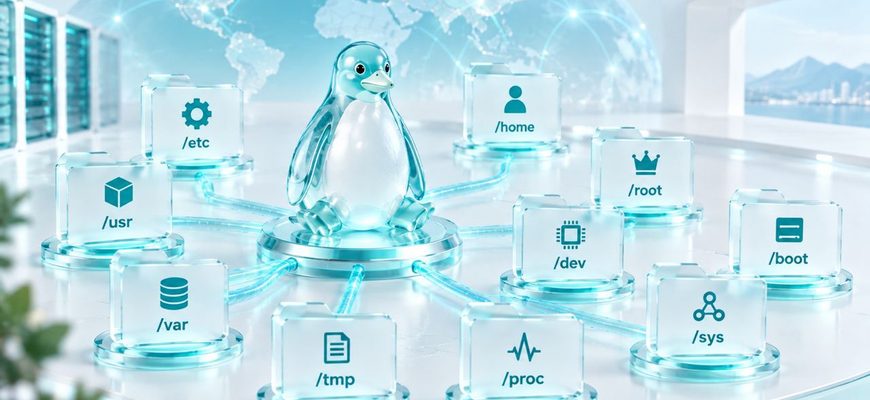
Open a Linux terminal and type ls /. You will see directories such as /etc, /home, /usr, /var, and /tmp. They are not arbitrary folders.

You have a program that should start automatically, keep running without an open terminal, restart after an unexpected failure, and produce logs you can inspect.

Find Linux service errors with journalctl: filter by unit, boot, time, and priority, follow live events, and turn log messages into focused troubleshooting.

Use systemctl to inspect, start, stop, restart, reload, enable, and disable Linux services safely—and understand what each action actually changes.

Learn how systemd coordinates Linux startup, what units and targets do, and how to inspect service definitions and dependencies without changing your server.

A Linux server keeps doing useful work even when nobody is logged in. Web servers accept requests, SSH waits for connections, databases process queries

When a Linux server is running a web server, database, SSH daemon, monitoring agent, scheduled job, or shell command, the operating system needs a way

SSH keys are one of the safest and most practical ways to access a remote server. Instead of sending a reusable password, your computer proves that it